Borusan Contemporary,
is a contemporary art, collection and education initiative of the Borusan Kocabıyık Foundation.
Personal Data Protection
Cookie Policy
© Borusan Contemporary, 2026.
Blog
Catastrophe and Its Images: Edward Burtynsky’s Chaos-Photographs
16 July 2026 Thu
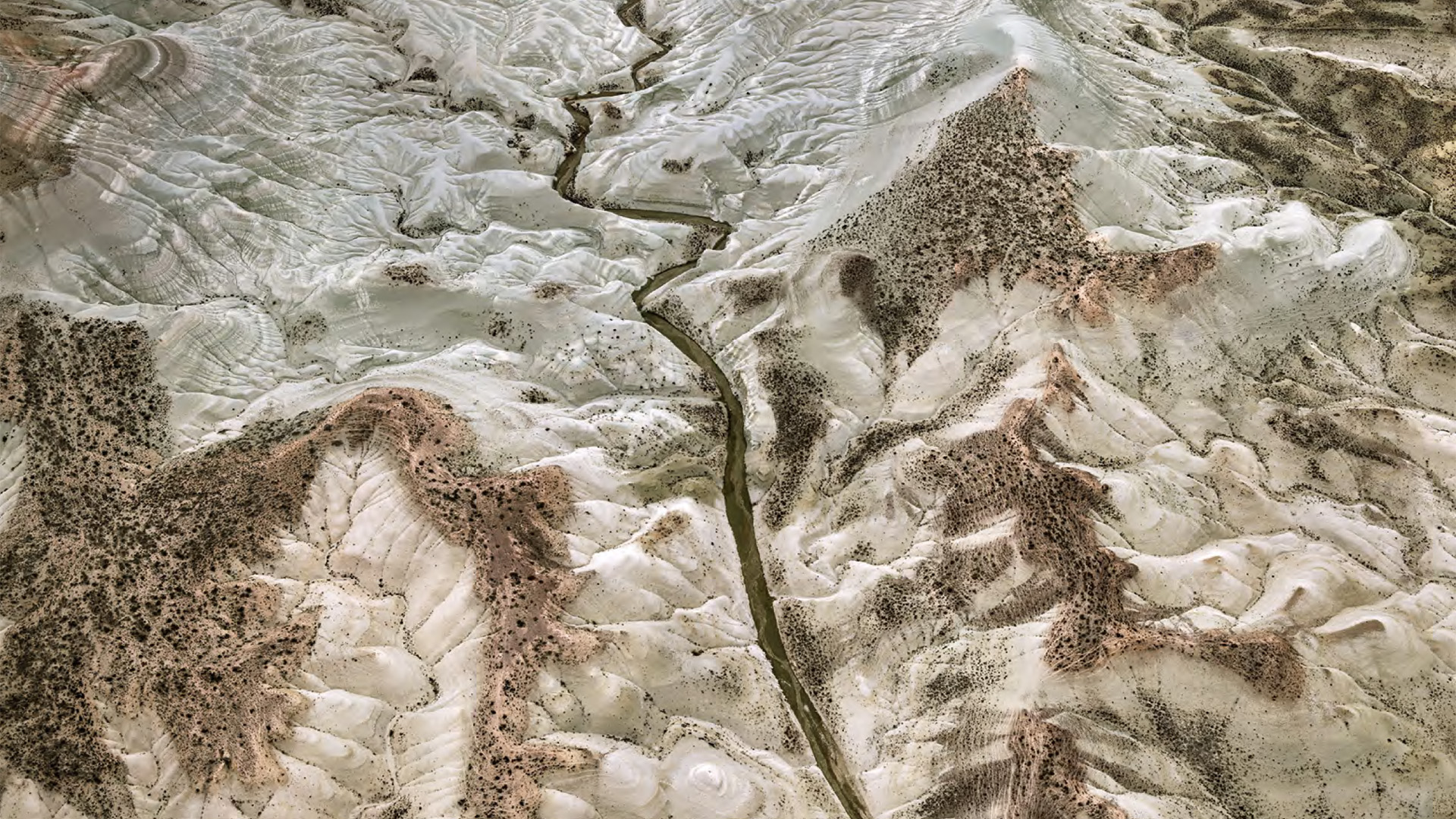
How should Edward Burtynsky’s Shifting Topography be approached and interpreted? Should it be regarded simply as a photography exhibition, or as a collection of photographic series? At one level, this is self-evident: Burtynsky is a photographer, and what we encounter are in fact photographs, “photographed places.” Yet at the same time, his photographs—particularly those in Shifting Topography, but also others—do not appear photographic, whether from afar or up close. They resemble paintings, painterly abstractions, as if not captured but drawn or painted. Accordingly, the awareness that they are, in essence, photographs, especially given that Burtynsky does not alter images, only multiplies their sense of uncanniness. Inevitably, a question arises: how can things, once photographed and thus documented as “real,” appear so unreal; how can concrete forms come to look so entirely imagined?
We can be sure that the answer to this question is not that Burtynsky produces his photographs according to a fixed style. Rather, he turns to something that inevitably renders photography painterly, bringing it closer to what might be called the fundamental definition of painting (a field in which lines and colors can no longer be distinguished from one another). This becomes the object of his artistic practice , which can even be described as scientific: a topography that is shifting, as the exhibition’s title makes clear. What this means is that the exhibition treats its images of the earth almost like a palette, drawing from its surface and skin, and creating a kind of painting in which lines and colors dissolve into one another. In short, it turns the earth into a canvas. But what makes this possible is also evident, even obvious: the wide-ranging, manifold destruction brought about by humanity’s attempts to dominate nature.
Thus, even if one can speak of a “Burtynsky-esque” mode of production or approach (a form of photography characterized by high-altitude views of nature transformed by human intervention), it should not be said that Burtynsky’s photographs move toward abstraction. As the exhibition’s curator, Marcus Schubert, points out , the photographs appear as abstract paintings from a distance, yet this effect arises less from their formal composition (the angles from which they are taken) than from the very essence of their content: if the photographs resemble painterly abstractions, this is due less to Burtynsky’s point of view than to the fact that humanity has already abstracted the earth through countless interventions, in other words, setting it on a seemingly irreversible process of transformation. Accordingly, the abstraction in Burtynsky’s photographs does not stem from a preference for abstraction or from a desire to create a zone of indiscernibility between painting and photography. Rather, it is inherent in what he chooses to show: what is already abstracted, what has been altered in both being and appearance, is the earth itself, not Burtynsky’s photographs.
What, then, does this mean? From what is the earth being abstracted? And what symptom is signaled by the “unreal” character of these photographs? The implication becomes clear: the earth transformed by human intervention, the world of the Anthropocene , and, in Shifting Topography, Türkiye in all its breadth and extent, reflect a time-space in which nature can no longer be perceived as such, nor understood as a totality of flora and fauna, but rather appears to have been lost—thereby indicating a crisis in the very concept of nature; it is no longer a stable entity, nor is it capable of self-renewal. What Burtynsky’s photographs show is a world irreversibly marked on all sides—through excavation, desiccation, burning, and destruction—little else besides.
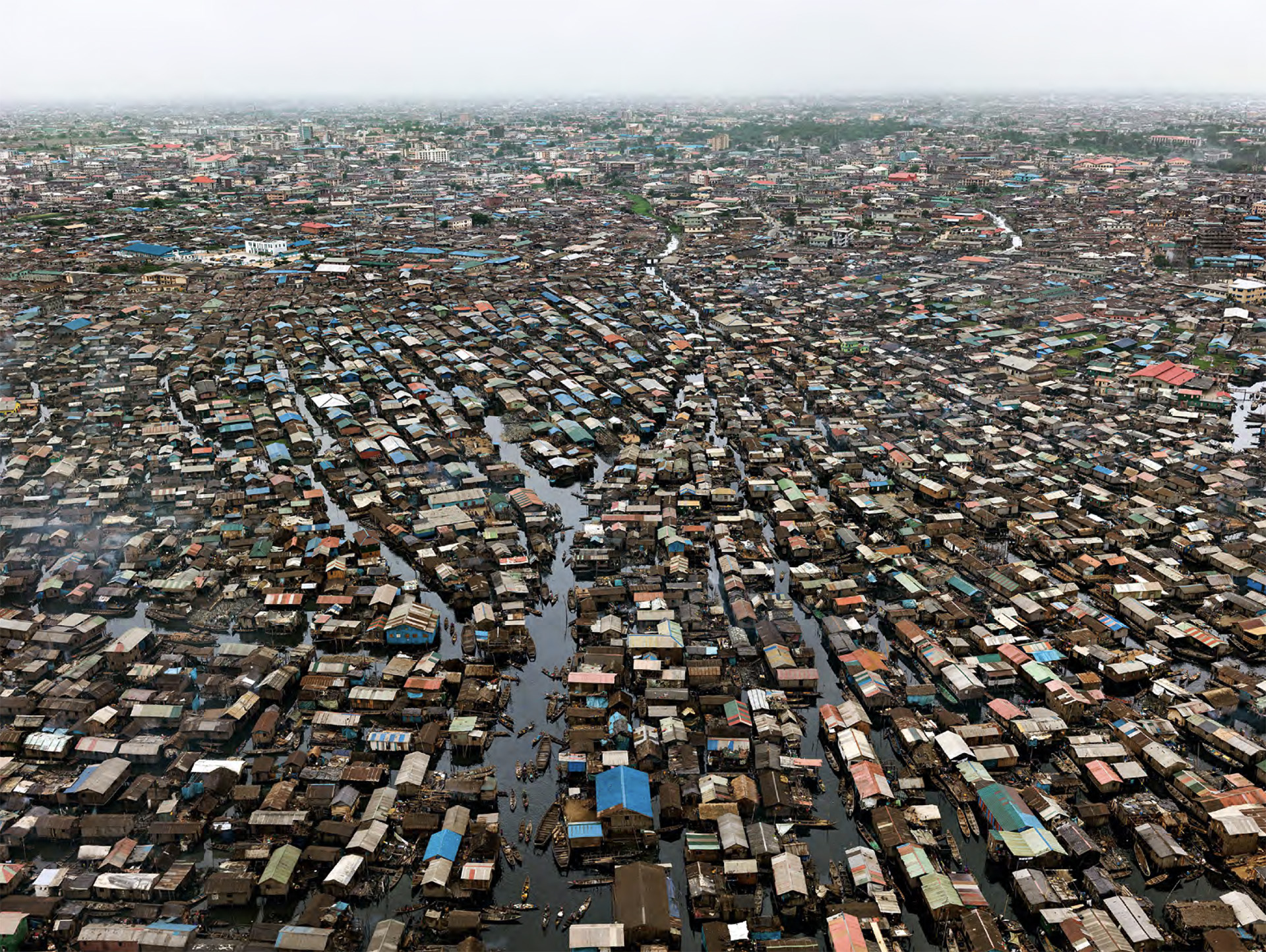
On the other hand, what the earth is abstracted from, in an ironic sense, is the human. Even if it is humanity that generates the abstraction we have been discussing in Burtynsky’s photographs, it is also, paradoxically, what is itself abstracted. In other words, humans have so profoundly altered the face of the earth that, in making one place habitable (such as the city), they have rendered another (such as the countryside) so uninhabitable that, in the end, even they can no longer live in the spaces they have transformed to such an extreme degree, nor find dwelling there. For this very reason, most of the photographs in Shifting Topography show either fully depopulated landscapes or what might be called pseudo-settlements, where humans are compressed into a disordered logic of habitation (as in Burtynsky’s photographs from the African Studies series). From this perspective, Burtynsky’s work makes visible the paradox whereby the one who abstracts (the human) is itself abstracted from what it abstracts (the earth).
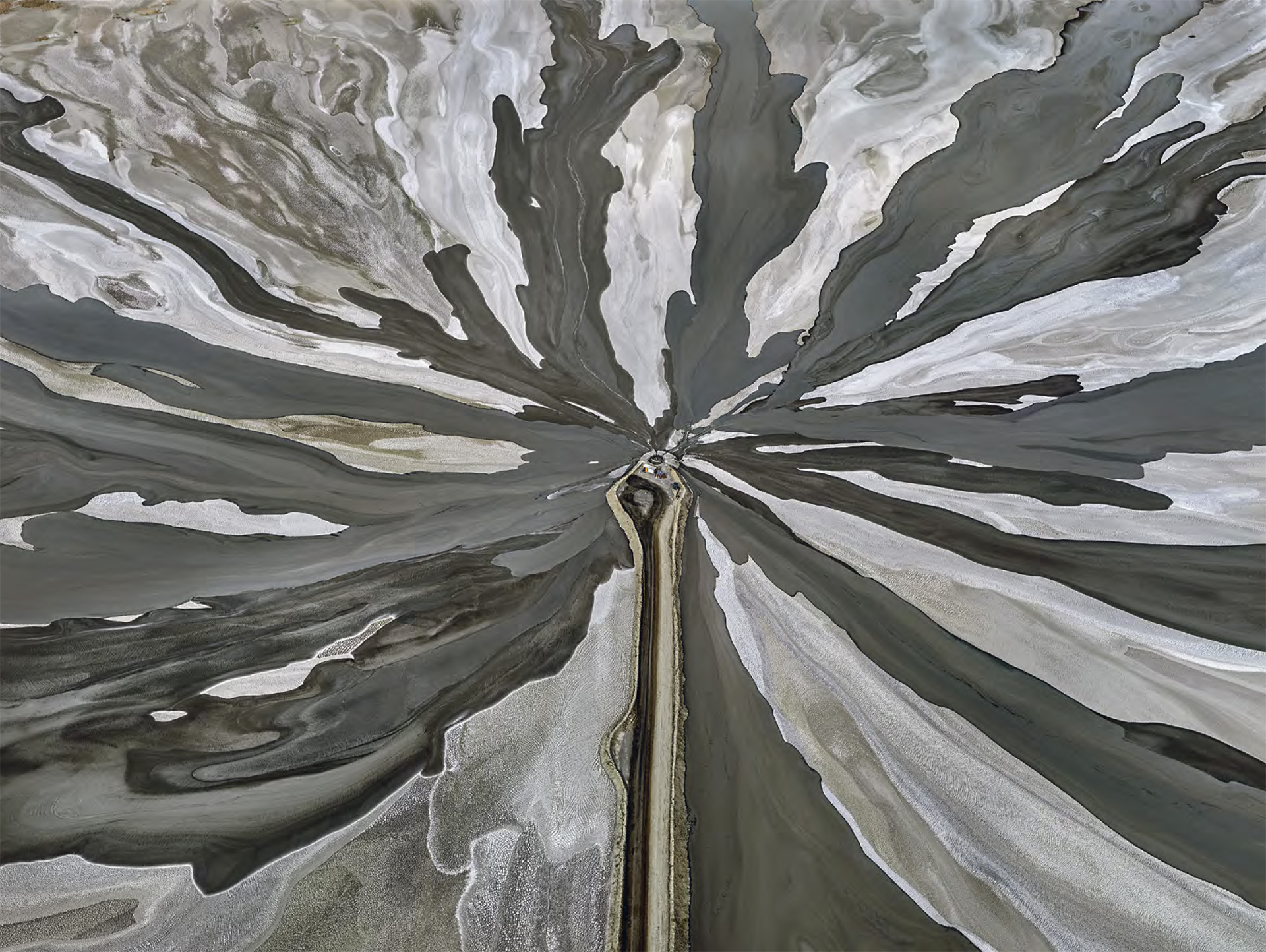
Turning to the symptom, we are confronted with another dimension of abstraction—one that concerns catastrophe. A painterly earth (as in Salt Lakes #3), which appears as if it were already a painting even when photographed, may, in these terms, be said to position Burtynsky as a painter in the most abstract sense possible; for what he works within is the very register of catastrophe and its phenomena in all their forms (tsunamis, landslides, tornadoes, and so on): an adverse condition that destroys, fragments, and collapses things into one another, first separating and then reassembling them, turning objects into accumulations rather than discrete entities. In this sense, a place that no longer appears real even when captured by a device designed to record reality in its fullest clarity—the camera—becomes, in Burtynsky’s work, a single thing: the site of catastrophe. This, then, is what we claim the symptom to be: a place that, despite being photographed, remains painterly and non-photographic—or rather, cannot be photographic at all—is, quite plainly, a catastrophe. For this reason, Burtynsky is as much a painter of catastrophe as he is its photographer. Like a meticulously produced painting, the earth, whose lines are fractured and whose layers are exposed (as in Uralkali Potash Mine #2), and whose colors are altered through various processes, is made visible as the “big picture” through his photographs.
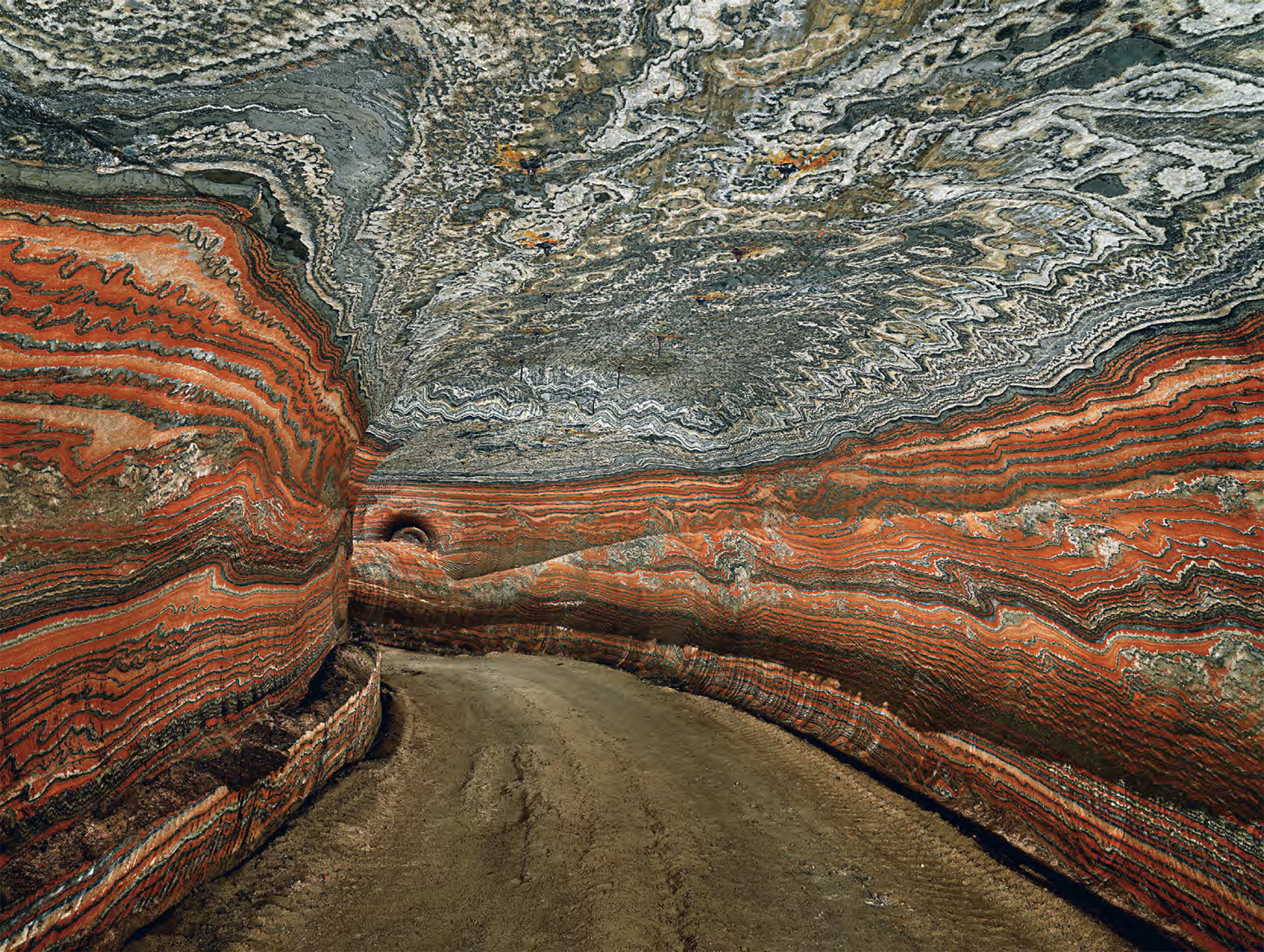
We can therefore say that Burtynsky’s photographs present images of catastrophe, since what they depict is not completed processes but a continuous, uninterrupted process that appears unlikely ever to come to an end, manifesting as Anthropocenic and, most often, industrial destruction. But if Burtynsky does this through photography, it is because only photography can present the current outcomes of this process in their full actuality; in other words, only photography provides the slowness, stillness, and quietness needed for the radically altered face of the earth to become perceptible. From this perspective, Burtynsky’s choice of photography is not arbitrary; it is deliberate, even almost necessary: photography turns the “forces of destruction” traversing the shifting topography into an object of contemplation—and thus of reflection—through its sheer immobility. It is precisely for this reason that almost all of his photographs are viewed, first from a distance and then up close, at least twice: the scope of catastrophe cannot be grasped in a single glance.
Taking all this into account, what can we ultimately say about Burtynsky’s Shifting Topography? That the exhibition is about catastrophe, yes—but also, in connection with this, that Burtynsky’s photographs are, in a sense, chaos-photographs. What is meant here is that these photographs do not only concern the disorder produced by catastrophe, a kind of turmoil in which even humans can find no place; they also draw out, from the very act of looking at and reading the photograph, a deeper disorder that lies beyond the apparent harmony they first make visible. Therefore, the meaning of chaos in Burtynsky’s photographs remains dual: on the one hand, they document the violence inflicted upon nature and the chaos it produces on the earth; on the other, they lead the viewer to assume they are looking at a kind of paradisiacal landscape, only to confront the infernal nature of what is in fact being seen, crystallizing chaos within the very act of looking at the photograph. What is at stake is a chaos that traverses vision itself, no less than the earth: a dual chaos.
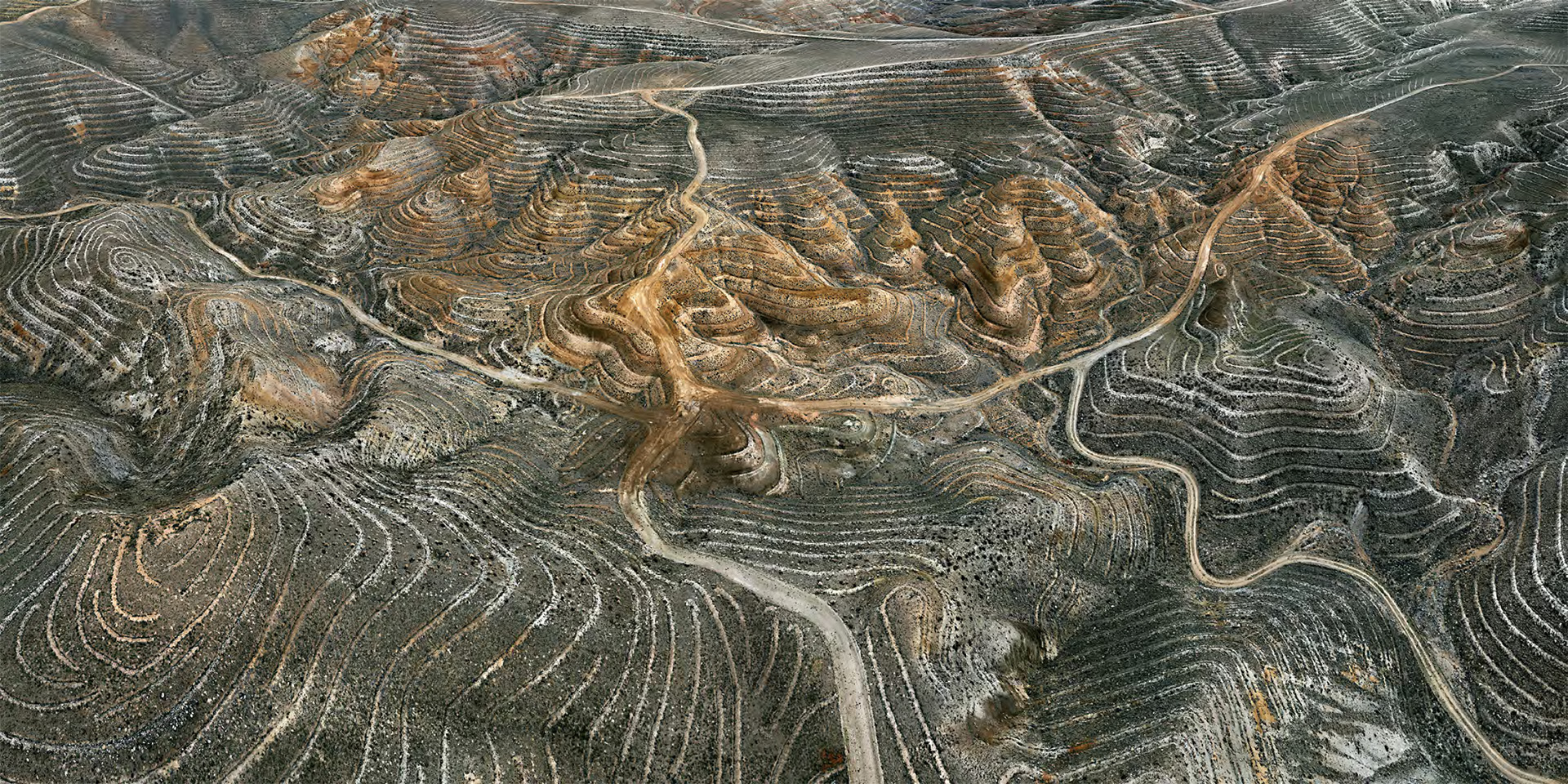
In short, we can argue that in Burtynsky’s Shifting Topography, the relationship between the chaos-photographs and the act of looking at them is not symmetrical but asymmetrical in nature. And this relation, of course, also carries a disquieting painterly quality. In this exhibition, what Burtynsky shows from a distance can only be understood by the viewer through a movement closer to the photograph itself—by approaching what has been distanced and brought near at once. Yet the distance Burtynsky establishes between himself and things cannot simply be replicated by the viewer; when it is, the very sense of chaos that the photographs produce and make visible is lost. For what Burtynsky seeks to convey in Shifting Topography is not the “harmony of nature” at all, but its opposite. And once again, to look at a photograph in this way is akin to looking at a painting, a form of abstract painting, a densely detailed canvas; yet here, close looking does not intensify admiration for what is seen, but rather gives expression to a sense of unease. It becomes impossible to believe that what is seen is the earth itself.
In summary, the image of the earth proposed in Shifting Topography—the “image of the world”—is not concerned with the beauty of nature, but rather with its capacity to produce catastrophe, long designated under the name of “disaster,” a capacity that has always evoked in humans as much awe as it has fear. But at the same time, and at its core, this potential becomes visible in Burtynsky’s photographs as something internalized by humanity itself; for what is seen is not nature exerting itself upon humans, but rather the transformation humans have imposed on nature, the damage they have inflicted on it. What turns these photographs into images of catastrophe, and makes them chaos-photographs, is precisely this: the destruction is ongoing and extensive, and what it reflects, exposes, and brings to the surface of each image—beyond any visible harmony—is chaos itself; a chaos that has merged with the earth, or, conversely, an earth that has merged with chaos through photography.
1- Seen in this light, Burtynsky’s practice is as much scientific as it is artistic in its approach to photography, insofar as he gathers findings, records them in series, and classifies them. His preliminary field research before taking photographs further underscores the scientific dimension of his work.
2- The curator’s interview on the exhibition is available on Borusan Contemporary’s YouTube channel:https://www.youtube.com/watch?v=owjs-nAnkeg
3- At this point, it is also worth turning to Burtynsky’s co-directed films on the contemporary condition: Anthropocene: The Human Epoch (2018) and Watermark (2013). The first takes up the epoch in broad terms, while the second shows how water resources are managed, reshaped, and consumed within it, tracing the relationship between wetlands and territoriality, or aridity.
4- In this context, the conceptual framework we propose in discussing the relationship between catastrophe and painting, which we also see as relevant to Burtynsky’s photographs, draws on Gilles Deleuze’s lectures on painting, recently translated into English. In these lectures, which would later underpin his only book on painting, Francis Bacon: The Logic of Sensation, Deleuze understands catastrophe as the formal analogue from which painting emerges; his claim is that painting, as the art of giving form to color and line, must first confront a condition in which they exist in a state of chaos, and it is precisely this condition that Deleuze calls catastrophe. Given that Burtynsky’s photographs, in our view, reflect similarly resonant imagery, we take this proposition as our point of departure. For Deleuze’s lectures, see Gilles Deleuze, On Painting: Courses, March–June 1981, ed. David Lapoujade, trans. Charles J. Stivale (Minneapolis: Univocal Publishing, 2025).
5- For a film that runs parallel to Shifting Topography and shows how Burtynsky makes visible the transformation of the earth through industrial production and manufacture, see Jennifer Baichwal’s Manufactured Landscapes (2006).
ABOUT THE WRITER
Hasan Cem Çal (b. 1994, Istanbul) completed his bachelor’s degree in the Cinema and Television Program at Istanbul Bilgi University. He earned his master’s degree from the Philosophy and Social Thought Program at the same university. He has authored texts on various topics, particularly cinema, which have been published in diverse publications such as Manifold, K24, Kompleks, Piksel.Bülten, and Art Unlimited. He has given talks at Türkiye’s leading cultural institutions, including the Goethe-Institut and the Sakıp Sabancı Museum, and his writings have appeared in publications by prominent art institutions such as Salt, Arter, and İKSV. A member of Manifold’s editorial team, Çal also works as a film programmer for Eldem Art Space. He is currently pursuing his PhD in the Communication Sciences Doctorate Program at Kadir Has University. His research interests include philosophy of film, experimental film and video, media theory, video games, and expanded cinema.
Share on





Borusan Contemporary,
is a contemporary art, collection and education initiative of the Borusan Kocabıyık Foundation.
Personal Data Protection
Cookie Policy
© Borusan Contemporary, 2026.
is a contemporary art, collection and education initiative of the Borusan Kocabıyık Foundation.
Personal Data Protection
Cookie Policy
© Borusan Contemporary, 2026.
FOLLOW






BORUSAN CONTEMPORARY